
Oster Electric Steamer Manual: A Comprehensive Guide
This guide provides detailed instructions for Oster electric steamers (models 4711, 5712, CKSTSTMD5-W). Access user manuals via the Internet Archive, offering free downloads and streaming options.
Oster electric steamers offer a healthy and convenient cooking method, preserving nutrients and flavors without added fats. Various models, including 4711, 5712, and CKSTSTMD5-W, cater to diverse kitchen needs. Online resources, like the Internet Archive, provide access to comprehensive user manuals for these appliances;
These manuals detail setup, operation, maintenance, and troubleshooting, ensuring optimal performance and longevity. Understanding your specific model is crucial for safe and effective steaming. Digital copies are readily available for download, offering immediate assistance and guidance.
Understanding Your Oster Steamer Model
Identifying your Oster steamer model – 4711, 5712, or CKSTSTMD5-W – is the first step. Each model possesses unique features and specifications detailed in its respective user manual. The Internet Archive hosts these manuals, offering free access to model-specific instructions.
Reviewing the manual clarifies component locations, operational procedures, and safety precautions. Familiarize yourself with the steamer’s capacity and recommended cooking times. Knowing your model ensures efficient steaming and prevents potential issues, maximizing your cooking experience.

Key Components and Parts
Oster steamers consist of a base, heating element, water reservoir, steaming trays, racks, a lid, and a condensation cup – essential for optimal functionality.
Steamer Base and Heating Element
The steamer base securely houses the crucial heating element, responsible for converting electrical energy into steam. Proper function of this element is vital for effective cooking. Ensure the base remains clean and dry to prevent malfunctions and maintain optimal performance. Regular inspection for any signs of damage, like cracks or corrosion, is recommended. Avoid immersing the base in water, as this could create an electrical hazard. A functioning heating element guarantees consistent steam production for perfectly cooked meals.
Water Reservoir and Fill Lines
The water reservoir is designed to hold the water that generates the steam for cooking. Pay close attention to the marked fill lines – do not overfill, as this can cause water to spill during operation. Using the correct water level ensures efficient steaming and prevents potential hazards. Regularly check the reservoir for mineral buildup, which can affect performance. Distilled water is recommended to minimize scaling and prolong the steamer’s lifespan; Always ensure the reservoir is properly seated before use.
Steaming Trays and Racks
Oster steamers utilize tiered trays and racks to maximize cooking space. These components are typically made of durable, food-grade plastic. Arrange food strategically on the trays, ensuring adequate space for steam circulation. Avoid overcrowding, as this can lead to uneven cooking. The racks provide support for delicate items like fish fillets. Ensure the trays are securely stacked before operation. Regular cleaning of the trays and racks is crucial for hygiene and optimal performance.
Lid and Condensation Cup
The Oster steamer lid is designed to trap steam, accelerating the cooking process and retaining nutrients. It often features a vent to regulate steam pressure. A clear lid allows for easy monitoring of food without releasing heat. Beneath the lid, a condensation cup collects excess moisture, preventing water from dripping onto food. Regularly empty the condensation cup after each use to avoid overflow. Ensure the lid fits securely to maintain optimal steaming efficiency.

Setting Up Your Oster Steamer
Proper setup involves initial cleaning, using the correct water type, and correctly assembling all steamer components before the first use.
Initial Cleaning and Preparation
Before first use, thoroughly clean all removable parts – steaming trays, racks, and the condensation cup – with warm, soapy water. Rinse completely and dry. Wipe down the steamer base and interior with a damp cloth. Ensure no cleaning solution remains.
Inspect all components for any shipping damage. Familiarize yourself with each part’s placement during assembly. This initial preparation ensures hygienic operation and prevents unwanted flavors in your first cooked meals. Proper cleaning extends the steamer’s lifespan.
Proper Water Usage and Types
Always use fresh, cold water in your Oster steamer. Distilled water is recommended to minimize mineral buildup, extending the steamer’s life and maintaining optimal performance. Avoid using tap water with high mineral content, as this can lead to scaling.
Fill the water reservoir to the appropriate fill line, never exceeding the maximum capacity. Do not operate the steamer without sufficient water. Regularly check the water level during extended steaming sessions.
Assembling the Steamer Components
Ensure the steamer base is on a stable, level surface before assembly. Carefully place the water reservoir onto the base, aligning it correctly. Next, position the steaming trays and racks securely within the steamer body, ensuring they are stable.
Finally, attach the lid, making sure it fits snugly to trap steam. Confirm all components are properly connected before powering on. Refer to your specific model’s diagram for detailed assembly guidance;

Operating Instructions
Power on your Oster steamer and set the desired steaming time. Add food to the trays, and monitor the process for optimal results.
Powering On and Setting Steam Time
Ensure the steamer is properly assembled and filled with water before powering on. Plug the unit into a grounded electrical outlet. Refer to your specific model’s instructions – some have dial controls, while others utilize digital settings. Adjust the steam time based on the food being cooked; consult the recommended cooking times section for guidance. The steamer will automatically shut off when the set time elapses, or when the water reservoir is empty, ensuring safety and convenience.
Adding Food to the Steaming Trays
Arrange food in a single layer on the steaming trays or racks, avoiding overcrowding to ensure even cooking. For delicate items like fish, consider using the included rack to prevent sticking. Ensure food doesn’t touch the water reservoir. Place the trays securely within the steamer unit. Cover with the lid to trap steam and maintain optimal temperature. Remember to leave space for steam circulation around the food for best results.
Monitoring the Steaming Process
Regularly check the water level during steaming, adding more if necessary to prevent the unit from running dry. Observe the food’s progress; steaming times vary based on food type and quantity. Avoid lifting the lid frequently, as this releases steam and extends cooking time. Use a timer to adhere to recommended steaming durations. Be cautious of escaping steam when checking, protecting hands and face.
Cooking with Your Oster Steamer
Explore diverse recipes! Utilize recommended steaming times for vegetables, fish, poultry, meat, and dumplings, ensuring perfectly cooked, healthy meals with your Oster steamer.
Recommended Steaming Times for Vegetables
Achieving perfectly steamed vegetables is simple with your Oster steamer. Generally, tender vegetables like broccoli, spinach, and asparagus require approximately 5-7 minutes of steaming time.
Root vegetables – carrots, potatoes, and beets – benefit from a longer steaming duration, typically 10-15 minutes, depending on their size and density. For optimal results, cut vegetables into uniform pieces to ensure even cooking. Remember to check for desired tenderness using a fork; adjust steaming time accordingly.
Steaming Fish and Seafood
Steaming is an excellent method for cooking fish and seafood with your Oster steamer, preserving moisture and delicate flavors. Generally, thinner fillets – like tilapia or sole – require only 8-10 minutes.
Thicker cuts, such as salmon or cod, may need 12-15 minutes. For shellfish like shrimp or scallops, 5-7 minutes is usually sufficient. Ensure the fish is opaque and flakes easily with a fork to confirm doneness. Consider adding lemon slices or herbs for enhanced flavor.
Steaming Poultry and Meat
While less common, your Oster steamer can cook poultry and meat, though times are longer. Boneless, skinless chicken breasts typically need 20-25 minutes, ensuring internal temperature reaches 165°F (74°C).
For larger cuts or bone-in pieces, extend steaming time accordingly. Meat, like beef or pork, benefits from marinating beforehand to retain moisture. Always use a meat thermometer to verify safe internal temperatures. Steaming yields tender, though less browned, results.
Steaming Dumplings and Rice
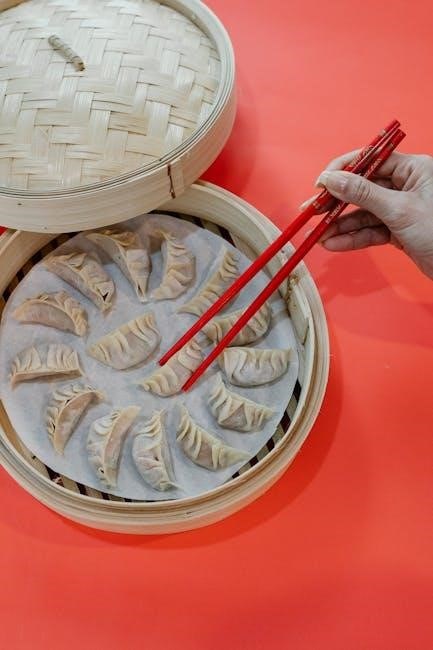
Oster steamers excel at cooking dumplings and rice! For frozen dumplings, steam for 8-12 minutes, depending on size and filling. Ensure they aren’t overcrowded on the tray.
Rice requires a 2:1 water-to-rice ratio; steam white rice for 20-25 minutes, and brown rice for 45-50 minutes. Use the steaming trays with holes for optimal results. Check for doneness and fluff with a fork before serving. Enjoy perfectly cooked grains and dumplings!

Maintenance and Cleaning
Regular cleaning extends your Oster steamer’s life. Disassemble components after each use, washing trays and racks thoroughly. Prevent mineral buildup with proper water usage and cleaning.
Disassembling the Steamer for Cleaning
Before cleaning, ensure the Oster steamer is unplugged and completely cool. Carefully remove the steaming trays and racks from the base. Detach the lid and condensation cup. Lift the water reservoir, noting any remaining water. Inspect all parts for food residue or mineral deposits. Separate each component for individual washing. Refer to the manual for model-specific disassembly instructions, as designs may vary between the 4711, 5712, and CKSTSTMD5-W models. Proper disassembly ensures thorough cleaning and prevents damage.
Cleaning the Steaming Trays and Racks
Wash the steaming trays and racks with warm, soapy water after each use. For stubborn food residue, soak them in hot water before washing. Avoid using abrasive cleaners or scouring pads, as they can damage the surface. Ensure all soap is rinsed thoroughly. These components are often dishwasher safe, but check your model’s manual (4711, 5712, CKSTSTMD5-W) for confirmation. Dry completely before reassembling. Regular cleaning prevents buildup and maintains optimal steaming performance.
Cleaning the Base and Water Reservoir
Always unplug the steamer before cleaning the base. Wipe the exterior with a damp cloth; avoid immersing it in water. The water reservoir should be emptied and cleaned after each use to prevent mineral buildup. Use a mild detergent and rinse thoroughly. For hard water areas, descale regularly with a vinegar-water solution (refer to the manual – models 4711, 5712, CKSTSTMD5-W). Ensure all parts are dry before reassembling and storing.
Preventing Mineral Buildup
Mineral deposits can reduce steaming efficiency and lifespan. Regular descaling is crucial, especially with hard water. Fill the water reservoir with a mixture of equal parts white vinegar and water. Run the steamer for a cycle, then discard the solution. Rinse thoroughly with fresh water, repeating if necessary. For models 4711, 5712, and CKSTSTMD5-W, consistent cleaning prevents scale. Check your manual for specific descaling recommendations.

Troubleshooting Common Issues
Common problems include heating failures, leaks, and improper steaming. Consult the manual for solutions; ensure proper assembly and water levels for optimal performance.
Steamer Not Heating Up
If your Oster steamer isn’t heating, first verify it’s securely plugged into a functioning electrical outlet. Check the power cord for any visible damage, and if found, discontinue use immediately. Ensure the unit is properly assembled, as some models have safety mechanisms preventing operation when components are misaligned. Confirm sufficient water is in the reservoir; the steamer won’t activate without it. Finally, consult the user manual for specific troubleshooting steps related to your model (4711, 5712, or CKSTSTMD5-W).
Water Leaking from the Steamer
If you notice water leaking from your Oster steamer, immediately unplug the unit to prevent electrical hazards. Inspect the water reservoir for cracks or damage, and ensure it’s correctly seated. Verify you haven’t overfilled the reservoir beyond the maximum fill line. Check the steaming trays and racks for proper placement, as misalignment can cause spills. Consult your specific model’s (4711, 5712, CKSTSTMD5-W) manual for detailed diagrams and assembly instructions to address potential leak points.
Food Not Steaming Properly
If food isn’t steaming adequately, confirm the steamer is powered on and has reached the correct temperature. Ensure sufficient water is in the reservoir, but avoid overfilling. Verify the lid is securely in place, trapping steam effectively. Check that food isn’t overcrowded on the trays, allowing steam circulation. Refer to recommended steaming times for specific foods (vegetables, fish, poultry) in your Oster model’s (4711, 5712, CKSTSTMD5-W) manual for optimal results.

Safety Precautions
Always follow electrical safety guidelines to prevent hazards. Avoid burns and scalds from hot steam and surfaces during operation and handling of the Oster steamer.
Electrical Safety Guidelines
Ensure the Oster steamer is plugged into a grounded outlet with the correct voltage. Never operate with a damaged cord or plug; replace immediately. Avoid using extension cords. Do not immerse the base in water or other liquids. Always unplug the steamer before cleaning or when not in use. Keep the cord away from hot surfaces. Inspect regularly for damage. If the appliance malfunctions, discontinue use and seek repair.
Avoiding Burns and Scalds
Exercise extreme caution when operating the Oster steamer, as steam is very hot. Do not open the lid during steaming; allow steam to release naturally. Use oven mitts or tongs when handling hot trays and food. Keep face and body away from the steam vent. Ensure stable placement to prevent tipping. Supervise children closely. Allow the steamer to cool completely before cleaning or storing. Be mindful of condensation buildup.
Proper Usage and Handling
Always operate the Oster steamer on a stable, heat-resistant surface. Ensure the water reservoir is properly filled, following fill lines. Never overfill. Avoid immersing the base in water. Unplug the steamer when not in use and before cleaning. Do not use harsh abrasives. Inspect the cord regularly for damage. Use only recommended accessories. Follow cooking times for optimal results and food safety.

Oster Steamer Model Variations (4711, 5712, CKSTSTMD5-W)
Oster offers several steamer models (4711, 5712, CKSTSTMD5-W) with varying features. Specific instructions and details are available for each model online via archives.
Comparing Features Across Models
Oster electric steamers, including models 4711, 5712, and CKSTSTMD5-W, present distinct features for varied cooking needs. The Internet Archive hosts user manuals detailing these differences. Model 4711’s manual is a larger 23.0MB file, while CKSTSTMD5-W’s is 8.6MB. Each model’s design impacts steaming capacity and potentially cooking times. Downloading manuals allows for a direct comparison of specifications, ensuring users select the best steamer for their culinary preferences. Consider size, included accessories, and specific functionalities when choosing.
Specific Instructions for Model 5712
The Oster 5712 electric steamer’s user guide, available on the Internet Archive, provides detailed cooking time recommendations. This model, identified by part number 110934, requires careful attention to water levels and food placement. Users should consult the manual for optimal steaming durations for vegetables, fish, poultry, and dumplings. Proper usage ensures efficient and safe operation. Download the PDF for comprehensive instructions, including cleaning and maintenance procedures specific to the 5712 model.
Specific Instructions for Model CKSTSTMD5-W
The Oster CKSTSTMD5-W instruction manual, accessible through the Internet Archive, details its unique features. This model’s manual (8.6MB in size) offers guidance on assembly, operation, and cleaning. Users will find specific instructions for achieving optimal steaming results with various foods. Pay close attention to the recommended steaming times and water levels. Download the complete PDF to fully understand the capabilities and safety precautions for the CKSTSTMD5-W steamer.

Finding Replacement Parts
Replacement parts for your Oster steamer can be sourced from Oster’s official website or through various third-party retailers offering appliance components.
Oster’s Official Website
Oster’s official website is the primary source for genuine replacement parts, ensuring compatibility and quality for your electric steamer. Navigate to the ‘Parts’ or ‘Accessories’ section, typically found under ‘Customer Support’ or a similar heading. Utilize the model number (4711, 5712, or CKSTSTMD5-W) to refine your search and locate specific components like steaming trays, lids, or water reservoirs. Check for detailed diagrams and part numbers to confirm the correct item before ordering. Consider registering your steamer on the website for potential warranty benefits and easier access to support resources.
Third-Party Retailers
Numerous online retailers, such as Amazon and eBay, offer replacement parts for Oster electric steamers. Compare prices and shipping costs across different vendors to secure the best deal. Verify the seller’s ratings and reviews before purchasing to ensure reliability and product authenticity. Always double-check the part number and model compatibility before finalizing your order. Be aware that third-party warranties may differ from Oster’s official coverage. Exercise caution and prioritize reputable sellers for a smooth and satisfactory experience.
Warranty Information
Oster provides standard warranty coverage for its electric steamers; register your appliance to activate it. Details regarding coverage length and terms are available on Oster’s official website.
Oster’s Standard Warranty Coverage
Oster’s standard warranty typically covers defects in materials and workmanship for a specified period from the date of original purchase. This generally includes one year for parts and labor, though specific terms can vary by model and region. The warranty doesn’t cover damage from misuse, accidents, or unauthorized repairs.
Proof of purchase is essential for warranty claims. To initiate a claim, contact Oster’s customer service with your model number and purchase details. Review the full warranty documentation on the Oster website for complete information regarding coverage limitations and procedures.
Registering Your Steamer
Registering your Oster steamer offers several benefits, including streamlined warranty claims and access to exclusive promotions. Oster encourages owners to register their products online through their official website. This process typically requires your model number, serial number, and proof of purchase information.
Registration allows Oster to notify you of important product updates, safety recalls, and new product offerings. Keep your registration confirmation for your records as proof of ownership and warranty activation. Visit Oster’s website to locate the registration portal.