
Exploring the Greek Bible PDF offers a window into ancient scripture, combining linguistic depth with digital accessibility. This guide outlines why these texts matter, how they illuminate early Christian thought, and the practical steps to obtain and study them. A gateway to linguistic insight.!!
Purpose of the Article
In the digital age, scholars, students, and curious readers increasingly turn to primary source materials to deepen their understanding of biblical texts. This article focuses on Greek Bible PDFs, offering a comprehensive overview of why these documents are essential, how they can be accessed, and what benefits they provide for linguistic, theological, and historical research. By exploring the purpose of this guide, readers will appreciate the unique value of engaging directly with the original Greek language, preserving nuances often lost in translation. The article demystifies locating, downloading, and studying Greek Bible PDFs, ensuring users navigate legal frameworks, choose reliable sources, and apply effective reading strategies. Ultimately, the goal is to empower individuals to use these digital resources as tools for critical analysis, personal enrichment, and scholarly collaboration, fostering a deeper connection with foundational texts of Christianity and ancient Mediterranean literature. The guide also highlights preserving textual integrity, respecting copyright laws, and supporting open‑access initiatives that promote wider dissemination of biblical scholarship. By the end, readers will have a clear roadmap for integrating Greek Bible PDFs into academic or devotional practices, equipped with practical tips, recommended tools, and an understanding of broader implications for early Christian writings. This purposeful approach encourages a balanced blend of academic rigor and accessible technology, inviting a diverse audience to engage with the Greek Bible meaningfully and legally compliant. Readers will also learn how to cross‑reference verses with contemporary translations, ensuring a comparative study that enhances academic rigor!!!

Historical Context
The Greek Bible PDF reflects early Hellenistic Christianity, where Greek became the scriptural lingua franca. From the Septuagint’s 3rd‑century BCE translation to later codices, these PDFs preserve linguistic and theological continuity for scholars. for deeper insight and.
Early Greek Translations
Before the Septuagint, Greek-speaking communities sought Hebrew texts in their own tongue. Scholars in Alexandria, Jerusalem, and Antioch produced fragmentary translations of the Torah, Psalms, and prophetic books. These early efforts, often anonymous, were driven by missionary zeal and the need for liturgical use. The resulting manuscripts, preserved in the Cairo Geniza and other collections, reveal a spectrum of linguistic approaches: from literal transliteration to dynamic equivalence. They also show the influence of Aramaic and Koine Greek syntax, illustrating the fluidity of early biblical interpretation. Though many of these texts were lost, their echoes survive in later canonical editions, offering modern scholars insight into the transmission of scripture across cultures and languages. The earliest Greek translations were not uniform; some were more literal, preserving Hebrew idioms, while others adapted to Greek rhetorical styles. Scholars debate the extent to which these early versions influenced later canonical texts. The manuscripts show variations in names, dates, and theological nuances, reflecting the diversity of early Jewish and Christian thought. These texts, though fragmentary, provide a window into the linguistic and cultural milieu of the Hellenistic world, revealing how scripture was rendered, read, and taught in diverse communities. By studying these early translations, researchers can trace the evolution of biblical language, understand the interplay between Hebrew and Greek, and appreciate the historical context that shaped early religious texts. These early Greek translations also highlight the debates of the time, illustrating how communities negotiated meaning across linguistic boundaries.!!
The Septuagint
Originating in the early 3rd century BCE, the Septuagint emerged as a monumental translation of Hebrew Scriptures into Koine Greek, primarily to serve the Hellenized Jewish diaspora in Alexandria. Scholars attribute its genesis to a group of 70–80 Jewish translators, a tradition that gives the work its name. The translation process involved meticulous comparison with Hebrew manuscripts, a practice that set a precedent for later biblical scholarship. Linguistically, the Septuagint reflects a blend of literal rendering and dynamic equivalence, capturing both the semantic depth of the Hebrew text and the idiomatic flow of Greek. Its influence extended beyond Jewish circles, becoming the primary scripture for early Christians and shaping the theological vocabulary of the New Testament. Textual variants within the Septuagint provide critical evidence for textual criticism, revealing how scribes adapted passages to fit contemporary theological concerns. The translation also introduced new interpretive layers, such as the rendering of prophetic visions and the use of Greek rhetorical devices. Over centuries, the Septuagint was canonized in various Christian traditions, and its manuscripts—ranging from papyrus fragments to parchment codices—are now housed in libraries worldwide. Modern critical editions, such as the Göttingen Septuagint, rely on these manuscripts to produce accurate, annotated texts. Digital preservation efforts have made the Septuagint accessible in PDF format, allowing scholars and lay readers alike to explore its linguistic nuances and historical significance. between Hebrew and Greek cultures and the evolution of scriptural interpretation.

Accessing Greek Bible PDFs
Finding Greek Bible PDFs involves reputable sources, ensuring authenticity. Use academic repositories, public domain archives, or licensed platforms. Verify file integrity, check for OCR accuracy, and respect copyright terms before downloading. Download responsibly.
Legal Considerations
When accessing Greek Bible PDFs, it is essential to understand the legal landscape that governs ancient texts and modern reproductions. The original Greek manuscripts themselves are in the public domain, but many modern editions, especially those with scholarly commentary, annotations, or high‑resolution scans, are protected by copyright. The following points outline key legal aspects:
- Copyright Status: Verify whether the edition is truly in the public domain. Editions published before 1923 in the United States are typically free, but newer critical editions may still be under copyright.
- Digital Rights Management (DRM): Certain PDFs may include DRM or watermarks that restrict copying or printing. Removing DRM without permission is illegal in most countries.
- International Variations: Copyright laws differ worldwide. A PDF that is legal in one country may be infringing in another, especially if the source is from a non‑public‑domain edition.
- Attribution and Citation: Even when using public‑domain texts, proper citation of the source edition is good scholarly practice and may be required by some academic institutions.
- Commercial Use: Using Greek Bible PDFs for commercial products, such as apps or printed books, typically requires explicit permission from the copyright holder.
Verify source and respect terms of use.
Check local laws.
Popular Sources
Several reputable platforms provide Greek Bible PDFs, ranging from freely accessible public‑domain editions to scholarly critical texts. Below are the most common options, each with its own strengths and caveats.
- Internet Archive – A vast digital library hosting scanned copies of early Greek manuscripts and printed editions. Many items are public domain, but double‑check copyright before downloading.
- Blue Letter Bible – Offers a downloadable PDF of the Greek New Testament (Westcott‑Hort) free for personal use, with interlinear tools and lexical lookup.
- Greek Bible Hub – Hosts the Textus Receptus and other Greek texts in PDF, with user‑friendly search across the corpus.
- BibleWorks – A commercial package with a comprehensive Greek Bible PDF, morphological analysis, and concordances. Licensing required for full access.
- Wikisource – New; “Download as PDF”.
- Open Bible Project – Provides a modern, open‑source Greek Bible PDF freely available under Creative Commons. Updated regularly by scholars.

When selecting a source, consider the edition’s textual basis (e.g., Nestle‑Aland, UBS, or the Septuagint), the presence of critical apparatus, and the intended use (academic research, teaching, or personal devotion). Always respect the licensing terms and provide proper attribution when sharing or publishing.

Reading Techniques

Approach the Greek PDF with a layered method: first skim for familiar passages, then annotate key words, and finally consult a lexicon for nuanced meanings. Use margin notes, highlight patterns, and cross‑reference verses to build contextual insight. Study daily. often!
Understanding Greek Grammar

Mastering Koine Greek grammar is essential for interpreting the Greek Bible PDF accurately. Start by learning noun declensions, verb moods, and participial forms. Recognize the nominative‑accusative‑dative case system and the role of word order in conveying emphasis. Pay attention to subjunctive, optative, and imperative moods, which signal purpose, desire, or command. Study participles—present, future, and aorist—to grasp continuous or completed actions. Conjugation patterns reveal tense, voice, and aspect; the passive voice often indicates the subject’s experience rather than the agent. Articles are definite and inflected; their placement can alter nuance. Master particles such as γάρ, δέ, and ἄρα, which provide logical connections. Greek prepositions and their case requirements dictate spatial or temporal relationships. Practice parsing sentences by identifying subject, predicate, object, and modifiers, then translate them into English while preserving the original meaning. Consistent practice and reference to a reliable grammar guide deepen comprehension and enhance study efficiency. Note that Greek often omits the subject pronoun; the verb form indicates person and number. Observe the middle voice, which can express reflexive or reciprocal actions. Recognize the difference between aorist and perfect tenses: aorist denotes a simple past action, while perfect indicates a completed action with present relevance. Regularly consult a Greek‑English lexicon to verify word meanings and collocations, and use a concordance to see how words appear in context across the corpus. Integrating grammatical analysis with contextual study equips readers to approach the Greek Bible PDF with confidence and depth. Additionally, reviewing Greek verb aspect enriches thematic understanding and reveals authorial intent, and mood shifts! This practice sharpens interpretive precision across diverse passages today.
Using Lexicons
When working with a Greek Bible PDF, a reliable lexicon is indispensable. Start with a comprehensive dictionary such as Liddell‑Scott‑Jones or the Thayer Greek–English Lexicon, which provide definitions, grammatical details, and usage examples. For quick reference, online tools like Strong’s Concordance or the Blue Letter Bible allow instant lookup of word forms and cross‑references. Pay attention to the root form; Greek words often appear in various inflected endings, so knowing the lemma helps locate all occurrences. Many lexicons include semantic fields, showing how a word’s meaning shifts across contexts—this is crucial for interpreting ambiguous passages. Use the lexicon’s morphological information to confirm tense, voice, and mood, ensuring accurate translation. When encountering rare or compound words, consult specialized resources such as the Anchor Bible Dictionary or the Greek New Testament Lexicon by A. T. Robertson. Incorporate the lexicon into your workflow by bookmarking frequently used entries or creating a personal glossary. Remember that lexicons list cognates and related words, which can illuminate thematic connections within the text. Finally, practice contextual reading: look up a word, then examine its occurrences in the PDF to see how it functions in sentence structure and narrative flow. This iterative process deepens understanding and improves translation accuracy, making the study of the Greek Bible PDF both rigorous and rewarding. Use these tools to insight now. Now

Tools and Software
Essential software for Greek Bible PDFs ranges from PDF readers such as Adobe Acrobat to Bible platforms like Accordance, Logos, and e-Sword. These tools offer annotation, search, and lexicons, enabling scholars to navigate complex texts efficiently for scholars now!!!.
PDF Readers
Choosing the right PDF reader is crucial for studying Greek Bible PDFs. A robust reader must support Unicode, display Greek characters clearly, and allow annotation. Popular choices include Adobe Acrobat Reader DC, which offers full‑text search, bookmarking, and a built‑in dictionary for quick lookup of Greek words. Foxit Reader provides a lightweight alternative with similar features and a customizable interface. SumatraPDF, a free and open‑source option, excels in speed and minimalism, though it lacks tools. For academic work, PDF-XChange Editor offers a rich set of annotation tools, including highlighting, sticky notes, and the ability to embed comments directly into the PDF. Each of these readers supports the PDF/A standard, ensuring long‑term preservation of the text. When working with Greek manuscripts, it is also helpful to use a reader that can display line numbers or page references in the margin, aiding cross‑referencing with other resources. Additionally, many readers allow the user to set custom color schemes, which can reduce eye strain during extended study sessions. Finally, consider the integration of external tools: some readers support plugins that connect to online lexicons or provide instant translation suggestions, further enhancing the study experience. By selecting a reader that balances performance, annotation flexibility, and support for Greek typography, scholars can focus on the linguistic nuances of the text rather than technical hurdles. This approach streamlines research.!
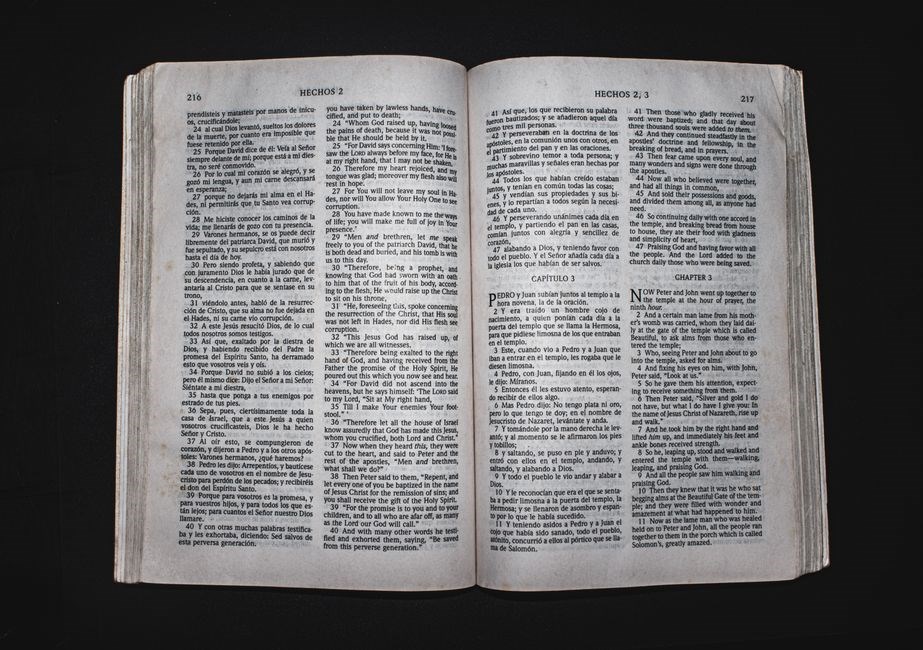
Digital Bible Platforms
Digital Bible platforms have revolutionized access to Greek scriptures, offering interactive interfaces that combine high‑resolution scans with searchable text. Platforms such as BibleHub, Blue Letter Bible, and the Greek Bible Project provide free access to the Septuagint and other Greek manuscripts in PDF and web formats. These sites allow users to toggle between the original Greek and English translations, compare parallel passages, and annotate directly on the page. Advanced search functions enable keyword queries in Greek, with results displayed in context, and many platforms integrate lexical tools that link words to definitions, conjugations, and syntactic notes. For scholars, the ability to export notes and create custom study sets enhances collaboration. Mobile apps extend this functionality to on‑the‑go study, featuring offline mode, bookmarking, and reading progress tracking. Moreover, many platforms support integration with external resources such as the Thesaurus Linguae Graecae, the Perseus Digital Library, and the New Testament Virtual Manuscript Room, providing a comprehensive research ecosystem. The user experience is further enriched by community forums where readers share insights, commentaries, and translation suggestions. As technology evolves, platforms adopt AI‑driven translation assistance, dynamic highlighting, and cross‑platform synchronization, ensuring the Greek Bible stays accessible and engaging for casual readers and researchers truly alike.
The journey through Greek Bible PDFs reveals the enduring power of ancient texts, bridging past and present. With digital tools, scholars and enthusiasts can explore, annotate, and share insights, ensuring these sacred writings remain vibrant and accessible for generations now!
Future Trends
Emerging technologies are reshaping how scholars interact with Greek biblical texts. Artificial intelligence now powers sophisticated linguistic models that can predict missing passages, reconstruct damaged manuscripts, and even suggest contextual translations in real time. These tools promise to democratize access, allowing students and lay readers to engage with the original Koine Greek without the steep learning curve traditionally associated with classical philology.
Another promising direction is the integration of augmented reality (AR) into digital Bible platforms. By overlaying interactive annotations onto scanned pages, AR can bring the ancient world to life, enabling users to explore historical settings, visualise textual variants, and trace the evolution of textual transmission across centuries. Such immersive experiences could transform classroom teaching and public outreach, making the study of the Septuagint and other Greek editions more engaging.
Finally, collaborative, open‑source initiatives are gaining momentum. Community‑driven projects aim to crowdsource corrections, add multilingual glossaries, and build shared databases of textual variants. This collective effort not only accelerates scholarly research but also ensures that Greek Bible PDFs remain living documents, continually refined and expanded by a global network of researchers, educators, and enthusiasts. These collaborative efforts show how digital scholarship bridges gaps and inspires generations.