
Cesar Dog Food Feeding Guide: A Comprehensive Overview (Updated 12/11/2025)
Navigating Cesar Canine Cuisine requires understanding serving sizes, calorie needs, and individual dog factors for optimal health and well-being, as of today’s date.
Understanding Cesar Canine Cuisine

Cesar Canine Cuisine represents a popular choice for dog owners seeking convenient and palatable meal options. However, maximizing the benefits of this food necessitates a thorough understanding of its composition and how it caters to varying canine needs. The brand offers a range of wet food options, typically presented in convenient tray servings, designed to appeal to a dog’s natural instincts with appealing textures and aromas.
Successfully utilizing a Cesar feeding guide isn’t simply about following package instructions; it’s about recognizing that each dog is unique. Factors like weight, age, activity level, and metabolic rate all play crucial roles in determining the appropriate daily intake. Owners must be prepared to adjust serving sizes based on their dog’s individual body condition and overall health. Careful observation and consistent monitoring are key to ensuring your canine companion receives the nourishment they require to thrive.

What is Cesar Canine Cuisine?
Cesar Canine Cuisine is a brand specializing in wet dog food, known for its convenient, portion-controlled trays. It aims to provide a flavorful and appealing dining experience for dogs, mimicking a more natural feeding style. The food is formulated with a variety of proteins and ingredients, designed to meet the nutritional needs of adult dogs.
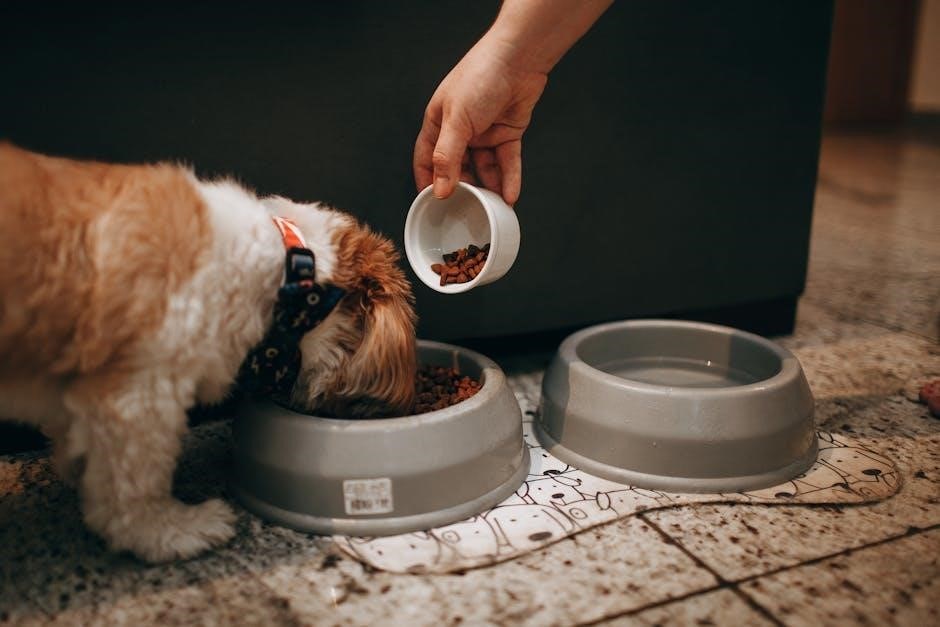
Unlike dry kibble, Cesar wet food typically has a higher moisture content, which can be beneficial for hydration. The trays are pre-portioned, simplifying feeding and reducing waste. However, this convenience also means careful consideration of serving sizes is crucial to prevent overfeeding. Understanding the caloric density and ingredient profile is essential for responsible pet ownership, ensuring a balanced diet tailored to your dog’s specific requirements. It’s a popular choice for owners prioritizing palatability and ease of use.
Cesar Dog Food Varieties
Cesar Canine Cuisine offers a diverse range of recipes, categorized to appeal to different canine palates and dietary preferences. Core varieties include classic meat-based options like Chicken & Vegetable, Beef & Vegetable, and Pork & Vegetable. Beyond these staples, Cesar frequently introduces limited-edition flavors and specialized lines.
These specialized lines often focus on specific needs, such as grain-free options or recipes with added vegetables. The brand also provides selections featuring different protein sources, like lamb or salmon, catering to dogs with sensitivities or preferences. Each variety maintains the signature Cesar tray format, ensuring consistent portion control. Exploring the full range allows owners to find the most appealing and nutritionally suitable option for their furry companion, promoting a happy and healthy mealtime.
Determining Your Dog’s Ideal Serving Size
Establishing the correct serving size for your dog with Cesar Canine Cuisine is crucial for maintaining a healthy weight and overall well-being. It’s not a one-size-fits-all approach; several factors must be considered. Begin by referencing the feeding guidelines on the Cesar packaging, which provides initial recommendations based on your dog’s weight.

However, these are merely starting points. You must then adjust based on your dog’s age, activity level, and metabolism. A young, active dog will require more calories than a senior or less active one. Regularly monitoring your dog’s body condition – feeling for ribs without excessive fat cover – is essential for fine-tuning the portion size. Remember, consistency and observation are key to finding the ideal amount.
Factors Influencing Feeding Amounts
Several key factors significantly impact the amount of Cesar Canine Cuisine your dog needs daily to thrive. Dog’s Weight is the primary determinant, with heavier dogs naturally requiring larger portions. Dog’s Age plays a role; puppies need more calories for growth, while seniors may need fewer.
Activity Level is also critical – highly active dogs burn more energy and need increased food intake. Finally, Metabolism varies between individuals; some dogs process food more efficiently than others. These factors interact, meaning a highly active senior might still need more food than a sedentary adult. Careful observation and adjustments are vital to ensure your dog maintains a healthy body condition and receives adequate nutrition.
Dog’s Weight
A dog’s weight is the most fundamental factor in determining appropriate Cesar Canine Cuisine serving sizes. Generally, smaller dogs require significantly less food than larger breeds. A 20-pound dog, for example, might need around seven servings per day, according to calculations, while a 50-pound dog will necessitate a substantially larger quantity.
However, weight alone isn’t sufficient; body condition is crucial. Overweight dogs need reduced portions to promote weight loss, while underweight dogs require increased feeding. Regularly monitoring your dog’s weight and adjusting the amount of Cesar food accordingly is essential for maintaining optimal health. Always refer to the packaging guidelines as a starting point, then tailor the portions to your dog’s individual needs.
Dog’s Age
A dog’s age significantly impacts their nutritional requirements and, consequently, Cesar Canine Cuisine serving sizes. Puppies, experiencing rapid growth, demand more calories and nutrients per pound of body weight than adult dogs. They typically require more frequent, smaller meals to support their development.
Adult dogs, having reached their full size, need a balanced diet to maintain their weight and energy levels. Senior dogs, conversely, often have slower metabolisms and reduced activity levels, necessitating fewer calories to prevent weight gain. Adjusting the amount of Cesar food based on your dog’s life stage is vital. Always consult with a veterinarian to determine the best feeding plan for your dog’s age and individual needs.
Activity Level
A dog’s daily activity level is a crucial determinant of their caloric expenditure and, therefore, Cesar Canine Cuisine portion sizes. Highly active dogs – those engaging in vigorous exercise like running, hiking, or agility training – require significantly more calories than sedentary companions. These energetic pups need fuel to support their physical exertion and maintain muscle mass.
Conversely, less active dogs, such as those with limited mobility or primarily indoor lifestyles, need fewer calories to avoid weight gain. Monitoring your dog’s activity and adjusting their food intake accordingly is essential. Remember that even short bursts of play contribute to their overall energy needs. Consistent observation and adjustments will ensure your dog maintains a healthy weight and body condition.
Metabolism
Individual metabolic rates vary considerably among dogs, influencing how efficiently they process food and utilize energy from Cesar Canine Cuisine. A faster metabolism means a dog burns calories more quickly, necessitating larger portions to maintain weight. Conversely, a slower metabolism requires smaller portions to prevent weight gain;
Factors like breed, genetics, and overall health contribute to metabolic rate. Some breeds are naturally more energetic and have higher metabolic needs. Additionally, certain medical conditions can affect metabolism. Observing your dog’s body condition and adjusting their food intake based on their individual needs is paramount. Regular veterinary check-ups can help identify any underlying metabolic issues.
Cesar Feeding Guide by Weight – General Recommendations
Here’s a general guideline for Cesar Canine Cuisine feeding, but remember individual needs vary. For dogs weighing 10 lbs, approximately 1.5 — 2 trays daily are suggested. A 20 lb dog typically requires 3 — 4 trays. Moving to a 40 lb dog, the recommendation increases to 6 — 8 trays per day. Larger breeds, around 60 lbs, may need 9 — 12 trays daily.

These are starting points; always monitor your dog’s body condition. Adjust portions up or down based on activity level, age, and metabolism. Divide the daily amount into two meals for optimal digestion. Refer to the packaging for specific calorie content and adjust accordingly. Consistent monitoring and adjustments are key to maintaining a healthy weight.
Reading the Cesar Dog Food Packaging
The Cesar Dog Food packaging is your primary resource for feeding information. Locate the feeding guide chart, typically based on your dog’s weight. Note the recommended daily serving size, expressed in trays or ounces. Pay close attention to the “Guaranteed Analysis,” detailing protein, fat, and fiber content.
Understand the calorie content, usually listed as kcal/kg or kcal/cup. This helps you tailor portions to your dog’s specific energy needs. Check the ingredient list to identify potential allergens or sensitivities. The packaging also includes storage instructions to maintain freshness and nutritional value. Always refer to the most up-to-date packaging information, as formulations can change.
Understanding Calorie Content in Cesar Food
Calorie content is crucial for maintaining your dog’s ideal weight and health. Cesar dog food packaging displays calories as kcal/kg or kcal/cup, representing the energy provided by the food. Higher activity levels necessitate more calories, while less active dogs require fewer.
Different Cesar varieties have varying calorie densities due to ingredient compositions. For example, recipes with higher protein or fat content generally offer more calories. Knowing the calorie count allows for precise portion control, preventing overfeeding or underfeeding. Remember that treats and supplements contribute to daily calorie intake and should be factored into the overall calculation. Accurate calorie management supports a healthy body condition and longevity.
Calculating Daily Calorie Needs
Determining your dog’s daily caloric requirement is fundamental to proper nutrition. A common starting point is the Resting Energy Requirement (RER) calculation: RER = 70 x (body weight in kilograms0.75). Then, multiply the RER by an activity factor: 1.6 for neutered/spayed, sedentary dogs; 2.0 for active dogs; and 3.0 for highly active working dogs.
This provides an estimated Daily Energy Requirement (DER). However, individual metabolism and health conditions can influence needs. Monitoring your dog’s body condition score (BCS) is vital. Adjust calorie intake based on whether your dog is gaining, losing, or maintaining weight. Consulting with your veterinarian ensures a personalized and accurate calorie plan tailored to your dog’s specific needs.

Adjusting Serving Sizes Based on Body Condition
Regularly assessing your dog’s body condition is crucial for refining feeding amounts. Utilize a Body Condition Score (BCS) chart – a scale of 1-9, where 5 is ideal. If your dog is scoring above a 5, reduce the daily serving size by 10-20%. Conversely, if scoring below a 5, increase the serving size by a similar percentage.
Monitor weight changes weekly. Slow, gradual adjustments are preferred to avoid digestive upset. Palpate the ribs; they should be easily felt with a slight fat covering. Observe the waistline – a visible tuck is desirable. Remember, these are guidelines; individual dogs vary. Consistent monitoring and adjustments, guided by veterinary advice, ensure optimal weight and health.
Monitoring Your Dog’s Weight and Adjusting Accordingly
Consistent weight monitoring is paramount when using Cesar Canine Cuisine. Weigh your dog every two weeks, using the same scale and time of day for accuracy. Record the weight to track trends. If weight gain occurs despite adhering to the feeding guide, incrementally reduce the daily portion size by 5-10%.
Conversely, if weight loss is observed, increase the portion size by a similar percentage. Pay attention to body condition alongside weight – a visual assessment provides valuable insight. Consult your veterinarian if weight fluctuations are significant or unexplained. Remember, adjustments should be gradual to avoid digestive upset and maintain optimal health.
Transitioning to Cesar Dog Food

A gradual transition to Cesar Canine Cuisine minimizes digestive upset for your canine companion. Over a period of 7-10 days, slowly increase the proportion of Cesar food while decreasing the amount of the previous food. Begin with a 25% Cesar / 75% old food mix.
Progress to 50/50, then 75% Cesar / 25% old food, before finally offering 100% Cesar; Monitor your dog’s stool consistency during the transition; loose stools indicate the change is happening too quickly. If digestive issues arise, slow down the process. Patience is key to a smooth and stress-free dietary shift, ensuring your dog enjoys their new meals.

Potential Issues and Considerations
While Cesar Canine Cuisine is generally well-tolerated, be aware of potential issues. Food allergies and sensitivities can manifest as skin irritation, itching, or digestive upset; consult your veterinarian if you suspect an allergy. Some dogs may experience digestive issues like diarrhea or vomiting during the initial transition or due to ingredient sensitivities.
Carefully observe your dog for any adverse reactions. Always introduce new foods gradually. If problems persist, consider an elimination diet guided by a vet. Remember that individual dogs react differently, and a food suitable for one may not be ideal for another. Prioritize your dog’s health and well-being.
Food Allergies and Sensitivities
Recognizing food allergies and sensitivities is crucial for your dog’s comfort. Common signs include persistent itching, skin rashes, ear infections, and gastrointestinal distress like vomiting or diarrhea. Allergies often develop to protein sources, but can extend to other ingredients. Diagnosis can be complex, often requiring a veterinarian’s guidance and potentially an elimination diet.
Allergy Asthma Immunol. Res. highlights the importance of identifying allergens. If you suspect a reaction to Cesar Canine Cuisine, document symptoms and consult your vet. They may recommend hypoallergenic diets or further testing. Careful observation and proactive veterinary care are key to managing sensitivities effectively.
Digestive Issues
Occasional digestive upset is common, but persistent issues warrant investigation. Symptoms like diarrhea, vomiting, gas, or changes in appetite could indicate a problem with Cesar Canine Cuisine or an underlying health condition. Gradual food transitions, as recommended, minimize digestive disruption. Ensure fresh water is always available to aid digestion.
Food Research emphasizes the link between diet and gut health. If digestive problems persist despite a slow transition, consult your veterinarian. They can rule out medical causes and suggest dietary adjustments. Consider a bland diet temporarily, then reintroduce Cesar gradually. Monitoring stool consistency and overall well-being is vital for identifying and addressing digestive concerns;
Complementary Feeding – Treats and Supplements
While Cesar Canine Cuisine provides complete nutrition, treats and supplements can enhance your dog’s well-being when used judiciously. Treats should comprise no more than 10% of daily caloric intake to avoid weight gain and nutritional imbalances. Opt for healthy, low-calorie options.
Supplements, like omega-3 fatty acids for skin and coat health, or probiotics for digestive support, may be beneficial, but always consult your veterinarian first. Avoid giving human foods as treats, as many are toxic to dogs. Remember that excessive treats can disrupt the balanced nutrition provided by Cesar, potentially leading to digestive upset or dietary deficiencies. Moderation is key!
Cesar Canine Cuisine and Dental Health
Maintaining good dental hygiene is crucial for your dog’s overall health, and diet plays a significant role. While Cesar Canine Cuisine isn’t specifically formulated as a dental diet, its texture can contribute to some mechanical cleaning of the teeth during chewing. However, it shouldn’t replace regular tooth brushing and professional dental cleanings.
Consider supplementing your dog’s diet with dental chews or toys designed to promote oral health. These can help reduce plaque and tartar buildup. Be mindful of the ingredients in dental chews, choosing options that are safe and digestible. Regular veterinary check-ups are essential for monitoring dental health and addressing any concerns promptly. A healthy mouth equals a happier, healthier dog!
Storage and Shelf Life of Cesar Dog Food
Proper storage is vital to maintain the quality and freshness of Cesar Canine Cuisine. Unopened pouches or trays should be stored in a cool, dry place, away from direct sunlight and extreme temperatures. Once opened, any unused portion must be refrigerated in an airtight container and used within 24-48 hours to prevent spoilage.
Always check the “best by” date printed on the packaging. This date indicates the timeframe during which the food retains its optimal nutritional value and flavor. While the food may still be safe to feed after this date, its quality may decline. Discard any food that shows signs of spoilage, such as an off-odor or mold.
Where to Purchase Cesar Dog Food
Cesar Canine Cuisine is widely available through various retail channels, offering convenience for pet owners. Major pet supply stores, such as PetSmart and Petco, consistently stock a comprehensive range of Cesar products, both in-store and online. Additionally, many large supermarket chains with pet sections carry select Cesar varieties.
Online retailers provide another convenient option. Websites like Amazon, Chewy, and the official Cesar website itself offer a broad selection and often feature subscription services for automatic deliveries. Comparing prices across different retailers can help you secure the best deals. Local grocery stores and smaller pet boutiques may also carry Cesar, so checking your neighborhood options is worthwhile.
Resources and Further Information
For comprehensive information beyond this guide, several resources are readily available to Cesar Canine Cuisine consumers. The official Cesar website (https://www.cesarpet.com/) provides detailed product information, feeding charts, and frequently asked questions. Veterinary websites and pet health portals, like the American Kennel Club (AKC) and the American Society for the Prevention of Cruelty to Animals (ASPCA), offer valuable insights into canine nutrition.
Researching dog food allergy information is also beneficial. Publications in journals like “Allergy Asthma Immunol Res” (2017) can provide scientific understanding. Furthermore, consulting with a veterinarian or a board-certified veterinary nutritionist is highly recommended for personalized feeding advice tailored to your dog’s specific needs and health status.
Contacting Cesar Customer Support
Should you require further assistance or have specific questions regarding Cesar Canine Cuisine, their dedicated customer support team is available to help. While direct contact information wasn’t explicitly provided in the source material, generally, pet food companies offer support through multiple channels.
Typically, you can reach Cesar via their website’s contact form, often found in the “Contact Us” or “Support” section. A phone number may also be listed for direct communication. Email support is another common option. When contacting support, be prepared to provide details about your dog’s weight, age, activity level, and any specific concerns you have regarding their feeding plan. This will enable them to offer the most accurate and helpful advice.